• Skip to main content
  • Skip to primary sidebar
  • Skip to footer

  • Home
  • About
  • Gallery
  • Classes
  • Trips
  • Books
  • Blog
  • Contact
  • Sign Up For My Blog

Blog

A Covered Button Press

November 21, 2021 7 Comments

I recently visited my friend Cathy. I hadn’t been to her beautiful lake home before and I enjoyed the view, as well as all of her lovely quilts, and the wonderful furniture made by her very talented husband Tom.

In the dining room she had a small table with an odd tool attached to it. I stared for a few minutes and finally had to ask “what is it?”

Do you know?

It’s a covered button maker. It’s actually called a Hand Press, and you can purchase one online for anywhere from $60 – $200. I’m so glad Cathy showed me how it works and then loaned it to me to play with (thanks Laura for helping me carry it to the car 😊).

I’ve made covered buttons before, but the tools involved were this kit from Dritz and a hammer!

Cathy pulled out the box with the blanks for all the different sized buttons, and the press dies

And made a button before our eyes:

button back “inside” up in bottom die
bottom die placed in press
top die
fabric placed in top die
button top placed into fabric, “inside” of button up
top die in place
a little bit of muscle

And voila… a covered button!

I’ve made quite a few covered buttons when garment sewing. This is one of my favorite vests. The buttons are only for decoration, but it was fun to stitch the design from the vest onto the fabric before making them.

I’m looking forward to doing a bit of playing with the press on my current challenge quilt. Thanks Cathy!!!

Have you ever made covered buttons? Do you have a story you’d like to share… with pictures?

A Rotary Blade Changing Aid

June 30, 2019 4 Comments


While in Paducah this Spring Eileen and I stopped by a vendor booth owned by Cynthia Ellis. She is not a quilter, but she does beautiful wood turning. I already have a lovely turned seam ripper and pen, but what caught my eye were her magnets – they’re beautiful:

I wasn’t sure why I needed one and then she made it clear. Changing the rotary blade in my cutter is always a nervous time – I don’t like to bleed! With her Magne-Dots (magnets with handles) there’s nothing to worry about. Let me give you a quick step-by-step:

Begin by taking your cutter apart. I like to lay each piece out in order, with the part closest to the handle piece facing up, so it’s easy to put back together.

Pick up a Magne-Dot and grab the old blade.

Lift it off the cutter screw:

And dispose of it in your sharps container.

Pick up the new blade from its case. If it’s a multi-pack, pick up the stack. You’ll notice the lubricant on the blades. This often makes them stick together.

To separate the blades, place the other Magnedot on the bottom blade and slide them apart.

Place the new blade on the cutter screw.

I find it helpful to use the top of the second Magne-Dot to hold the blade while releasing the first Magne-Dot.

My fingers never came near the sharp edge of the blade and I’m ready to reassemble my cutter!

I love it when artists come up with great ideas for using their work and I feel it’s an honor to purchase from them. I’ve ordered a number of pairs of Magne-Dots from Cynthia’s website to give as gifts. To visit her site and get your own Magne-Dots click here!

And remember – they work best in pairs!

A Cut Above

August 26, 2018 8 Comments

Yesterday I bought myself a new pair of scissors. It isn’t because I don’t own any  😀 !

I have paper scissors, kitchen sheers, tiny appliquĂŠ scissors, pinking sheers… you name it, I probably own it!

I have my first pair of Ginghers that I still keep in their original box, and use on special occasions. Like when I needed an artsy self-portrait for our Threadbender’s blog (Click here to meet the members of this very creative group!)

A little corny, but I bet it made you smile!

I have serrated scissors that are great for trimming layers without shifting (I tried to get a pic of the serrated edge in the close up to the right).

I have duck-billed appliquĂŠ scissors that protect the fabric under the blade.

And I was even given a pair of scissors made to cut batting.

But the ones I use the most, and are by far my favorites, are my Fiskars™  “micro tip, easy-action” scissors.

They have been used A LOT!!! They have a spring feature that causes them to open automatically after you make a cut, which is really easy on the hands. The slide lock broke within the first year, so they are always open, but I don’t mind, because they are oh-so sharp. Or at least they were  😥

So it was time to treat myself to a new pair!

I can’t wait to tear them open. I will be saving them for close trim work – like when I do my RepliquĂŠ technique. But the old ones are dear friends and will live next to my machine for cutting threads and other simple tasks.

And one last thing – actually a warning:

Don’t use them while sitting on an exercise ball. I used to sew on one because it was good for my balance, but I had the misfortune of bumping my favorite scissors off the table and – you guessed it – that very sharp point punctured the ball and I ended up on the floor – LOL!

What scissors are your favorites! Please respond and tell us why!

*******************

And one more thing! I received an email from the National Quilters Circle website. You can learn all about them on their website: https://www.nationalquilterscircle.com/ . Their email said that I had been nominated for their “Best Overall Quilting Blog Award”.

I’m surprised and honored. They said in their email to me that I could share this info on my blog to continue to be nominated. If you like my blog, and are interested in participating, please go to: https://go.nationalquilterscircle.com/b13184/. Thanks!

Glue Basting to Miter a Border

February 11, 2018 2 Comments

Before I get to my topic of the week, I’d like to share a few helpful hints for using a blog such as mine. Some posts (like this one) contain instructions for techniques you may want to save. There are a number of ways to do this:

• When you click on the link to open my blog the first thing you’ll see is my most recent post and, if you scroll down  through it, you’ll find my previous posts. Because I put a lot of pictures in my posts, my site may load slowly on your computer or other device. That’s why I always send you a link to just my most recent post also.

• If you are on my full site and want to open just one of my posts, simply click on the title of that particular post:

The post title is in the red circle.

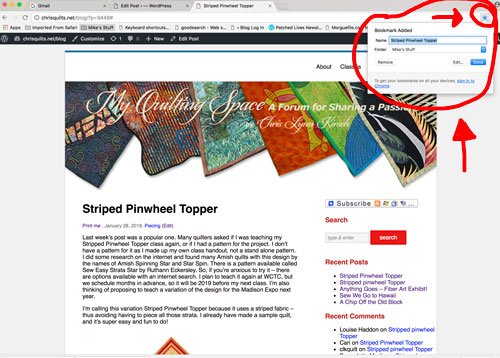
• When you’re in the page that contains only one post, the title will turn black as in the example below. You can “bookmark” that post to save it for future reference. On my computer I can add a bookmark by clicking on the star in the upper right, typing in a name for it and clicking on “done”. This process may be different on your computer, but it should be similar.

Once again – look for the red circle above :-).

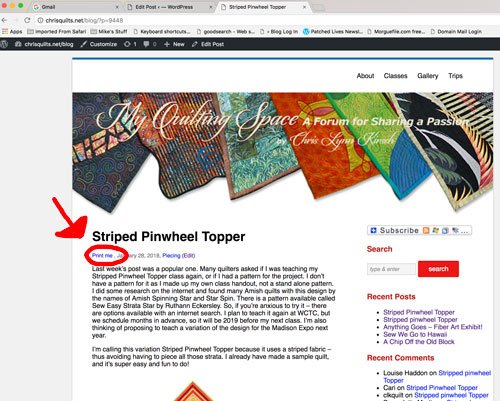
• If you’d rather print that post and save a hard copy of the information, click on “print me” under the post title (and be sure you’re connected to a printer):

I hope this was helpful. Now for my topic of the week:

******************************

I’ve recently been using Elmer’s School Glue™ to match fabric patterns when sewing strips together. This week we’ll use the same glue technique to miter a border.

• Sew the border strips onto 2 adjacent sides of the quilt top, using a 1/4″ seam allowance, and backstitching 1/4″ from the corner on each strip:

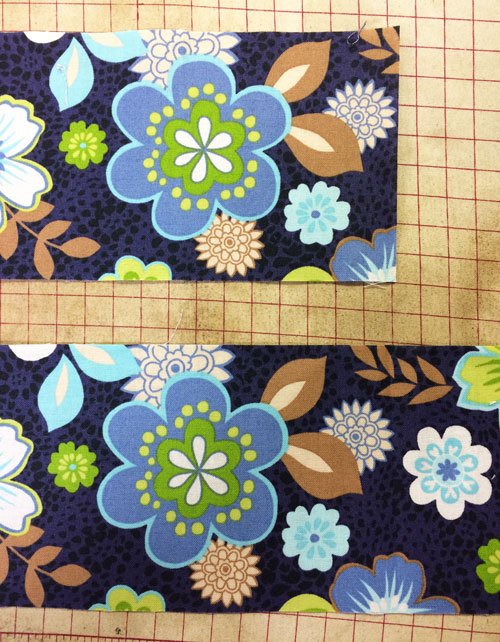
• Lay the vertical strip flat against the ironing surface:

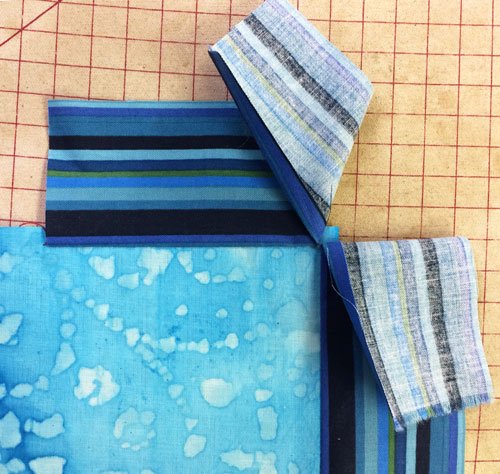
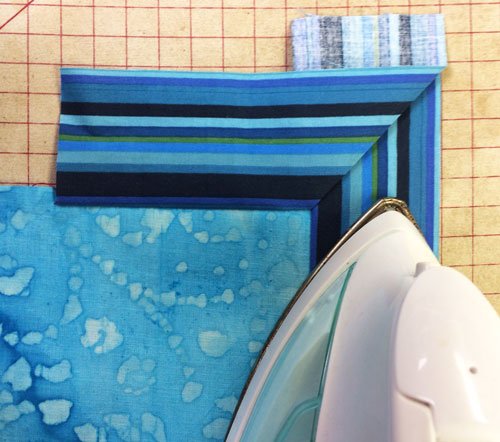
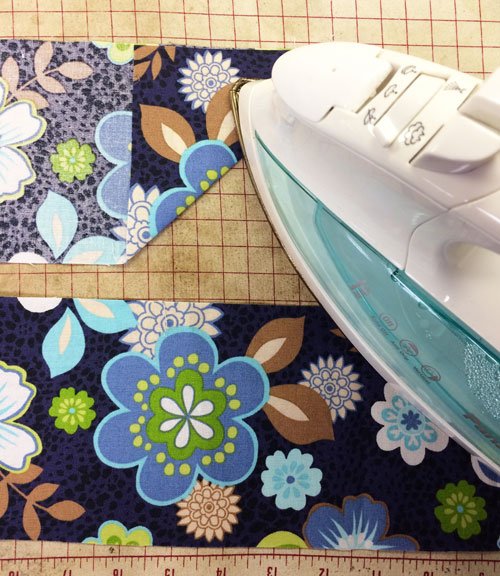
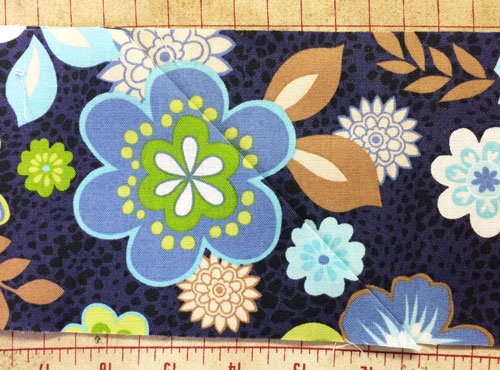
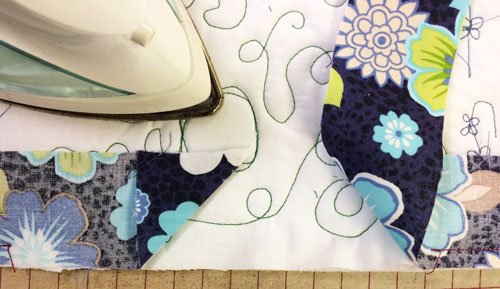
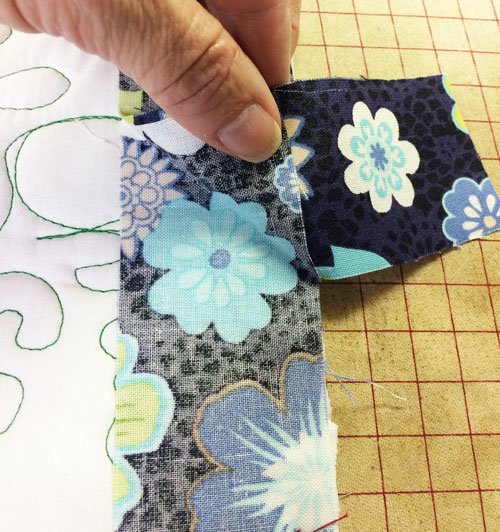
• Fold the end of the horizontal strip under at a 45 degree angle, forming a miter.  If your fabric happens to be a stripe – the miter will be much easier to see  :-). Press:

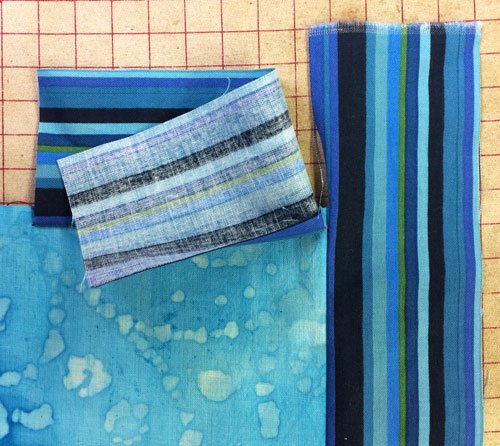
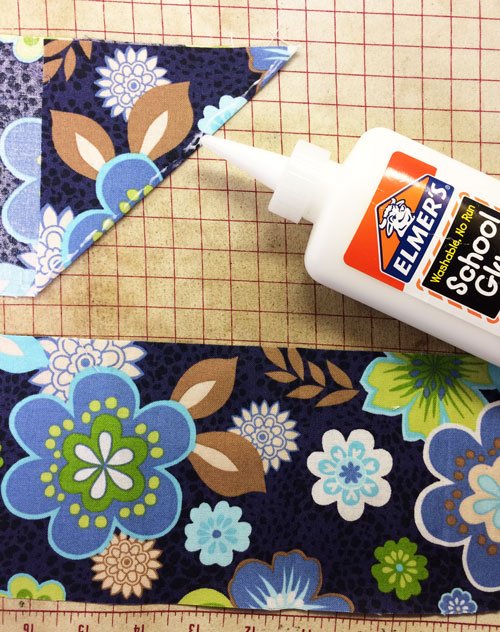
• Pull this newly pressed crease back

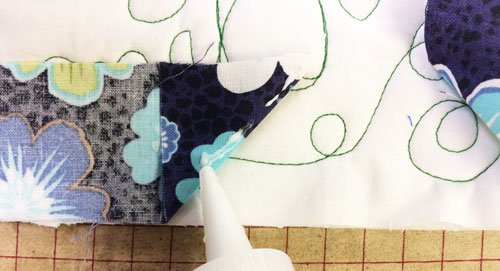
• and squeeze a thin line of glue along the edge of the crease:

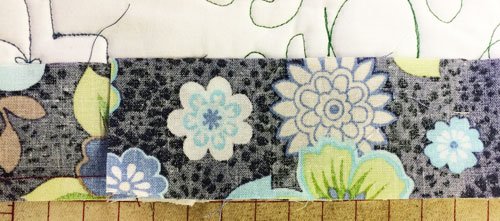
• Lay the glued crease back in place on the vertical strip and press again to dry the glue:

• Once the glue is dry, fold the quilt top in half diagonally to expose the glued crease and stitch in the crease. Trim off the excess strips,  1/4″ from the stitching, and you’re done.

*************************

And one last thing!

Last week I shared information about the Sun Prairie Quilt Show. There will be two other shows in the Southeast Wisconsin area that same weekend:

West Suburban Quilters Guild will be holding their show at the Waukesha Expo Center. For more info go to: http://wsqg.net/quilt-show/

The Crazy Quilters in Mukwonago will also be holding their annual quilt show at the Mukwonago Middle School. For more info go to: http://www.mukwonagocrazyquilters.com/annual-show/

School Glue – a Quilter’s New Best Friend

February 4, 2018 4 Comments

Last week I shared how to match striped fabric strips, using “Elmer’s School Glue”™, with a straight seam. This time I’ll demo matching with a bias/mitered seam. Its the same basic maneuver – glue basting, plus a pressing tip for creating the miter:

• Begin with 2 strips you want to sew together end-to-end, and find a matching pattern on both.

• Turn over one strip and fold back the corner of the end. Press.

• Run a thin line of glue along the pressed crease.

• Lay the “pressed/glued” strip on top of the second strip, glue side down, and carefully match the pattern. Iron in place to dry the glue.

• Then fold the strip you just added on the right, down to expose the inside of the crease and stitch in the crease.

The great thing about using the glue is – if it doesn’t match exactly, even after pressing, simply pull it apart and glue again!

And …

The above technique works great for finishing a “no-end” binding!

• Sew your binding to the quilt, leaving about 8″ open between the beginning and ending tails.

• Fold back the end of the tail on the left at a 45 degree angle and press.

• Run a thin line of glue along this crease.

• Place the tail on the right back evenly on top of the glued crease. Press to dry the glue.

• When the glue is dry, pick up the strip tails, open them to reveal the inside of the crease and stitch in the crease.

Trim the excess tails 1/4″ from the seam and continue sewing the binding to the quilt.

If you prefer to use a double or “French” binding, simply leave yourself a wider opening between the beginning and ending stitches (perhaps 12″), open the strips flat, and connect them as above, folding the strip back in half after it is stitched, and sewing it to the quilt.

I do hope you’ll try this technique. I’ve found it extremely quick and accurate!

An FYI for local quilters –

The Sun Prairie Quilt Show is fast approaching. To enter a quilt in the competition and/or read all about the show click here!

Shape Cut a Quarter

March 19, 2016 4 Comments

Before we get to this week’s topic, I’d like to do a quick update on my quilt: “How Beautiful – Liberty”. It’s striking me as quite funny – I’ve enjoyed making my accordion door quilts, but never imagined anyone else would want to do it! Since sharing my last two blog posts, and winning the ribbons in Sun Prairie, I’ve had oodles of requests. My mind is just buzzing over the prospect of writing another book with all the techniques from “Liberty” in it. Please stay tuned!

**********************

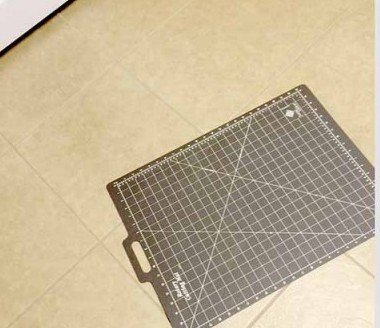
A few weeks ago the grandkids were entertaining themselves very nicely with their toys in the living room. So I decided it would be a good time to take some pictures for this week’s blog. I brought up my cutting tools, put them on the counter, laid the mat on the floor (the lighting is best in the middle of the kitchen floor)

and went to find my camera. When I returned, this was what I found:

SC kids mat

Good thing I had my camera. Trey found sitting on my cutting mat so fascinating, I ended up having to move it to the kitchen table for the photo-shoot  🙂 . Now on to the topic at hand!

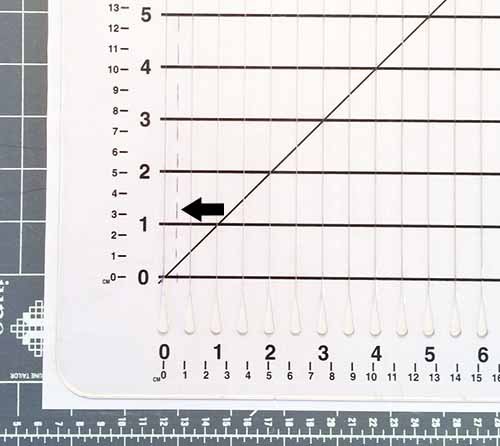
shape cutA number of years ago I shared my top three favorite rulers, and included in the list was the Shape Cut™ ruler by June Tailor. This past Christmas I did a post using it to fringe fleece scarves (click here for that post) and recently I shared a similar ruler for marking (click here for the Grid Marker post).

The Shape Cut™ is a great tool for rotary cutting multiple, accurate strips. When it came out it was well received, but it was limited to ½” increments. Back then I was doing freelance work for June Tailor (we’re talking the 1990’s). They asked me to come up with a way to cut Ÿ” increments with the ½” ruler and I was happy to take on the challenge (they did come out with a Quarter Cut™ ruler, but it had to be made shorter for stability, which made it less useful).

I spent quite a bit of time coming up with the answer, and I think you’ll find it works well. It’s really quite simple, and I devised a chart which does the math for you, that I’ll include in this post. I discovered the trick is to have a dashed line marked between the “0” and ½” slots on the Shape Cut™. The newer ones come with this marking,

SC orig dashed line

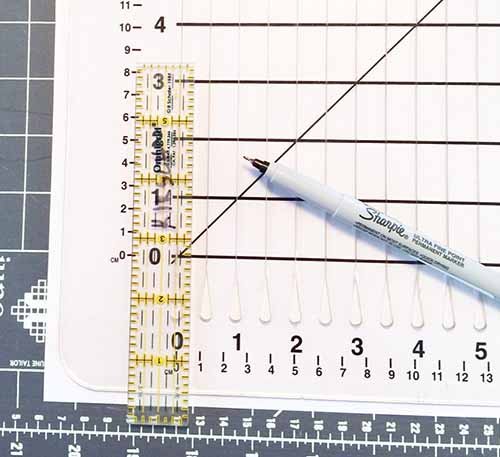
but if you have an older ruler, you can add it with a fine line permanent marker.

SC dashed ruler

SC drawn dashed line

Now for the step-by-steps. I’ve given you all the info, but remember there will be a chart at the end of this post that does the math for you!

Step 1: Choose a Ÿ” increment (i.e. 2 Ÿ”), double it (i.e. 4 ½”) and cut strips at this size. for 2 Ÿ” strips your cuts will be at 4 ½”, and 9″, and if you have the larger Shape Cut™, you can continue to cut at 13 ½” and 18″.

Step 2: Lift the Shape Cut™, remove the excess fabric from squaring up on the left cut, and reposition the ruler with the “dashed” Âź” line, along the left edge of the fabric.

We will now, in essence, cut these double strips in half!

Step 3: Cut in the 2 ½” slot (since the fabric is lined up Ÿ” from the zero slot, this strip will be 2 Ÿ”).

Step 4: Add the double cut amount – for our example – 2½” + 4½” = 7″. Cut in this slot, add 4 ½” again, and cut in the 11 ½” slot. If you have the larger ruler, continue by adding 4 ½” for each cut.

SC paper strips

Here’s a chart with all the math done. To open a printable pdf version – click here, then click on the purple lettering with the word attachment in it (I’m not sure why the extra step, but it works).

Shape Cut quarter cut chart

SC Trey matI’d like to close by sharing a short video I took when I couldn’t break Trey’s fascination with the cutting mat. Click here to view it. Grandchildren are such a blessing!

Grid Marking

February 7, 2016 3 Comments

Last week’s Gnome Home blog post was total silliness and fluff. This week’s has information that I hope you will find helpful in your quilting!

I recently surprised myself when I realized I’d never posted about a very helpful tool called the Grid Marker™.

GM mine

Years ago I did freelance work for June Tailor™: demonstrating for them at trade shows, testing their products, designing patterns and stitching samples. It was a delightful learning experience to work on that side of the industry. During my time with them I came up with the idea for the Grid Marker. I am a huge fan of their Shape Cut™ ruler, and felt there was a need for the same type of tool to mark accurate parallel lines. The slots in the ruler are wide enough to accommodate a pencil or marker – and it’s really easy to use!

To make vertical lines, set the bottom horizontal line of the Grid Marker™ along the bottom of the area to be quilted. Choose your favorite marking tool and draw in the slots at your desired increment:

GM verticals
Drawing with the ruler on the left. Accurate lines drawn on the right.

I hope you can see that horizontal lines would need the bottom line of the ruler set along the side of the block. Doing both results in cross-hatching.

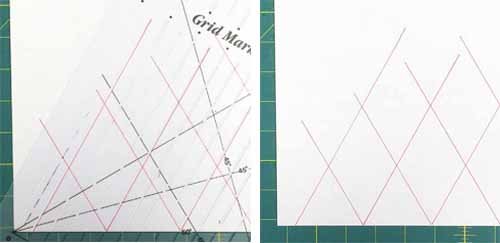
To do diagonal lines, choose 45Âş or 60Âş, and place that line (I used 60Âş) along the bottom of the quilt block. Once again, draw in the slots at your desired increment:

GM angles

To do “hanging diamonds” (diagonal cross-hatching), place the other 60Âş line along the bottom of the block and draw the opposite angled lines:

GM crosshatching

This tool makes quick work out of drawing parallel lines, and it keeps them parallel!

When the Grid Marker™ was introduced, it was chosen as one of Quilter’s Newsletter Magazine’s top 3 tools of the year! June Tailor™ continues to sell the Grid Marker™, but the newer version isn’t quite as long as my ancient and well used one.

Grid Marker

You can find them on the June Tailor™ website, at JoAnn’s, and hopefully at your local quilt shop.


Floss Frenzy

August 17, 2014 55 Comments

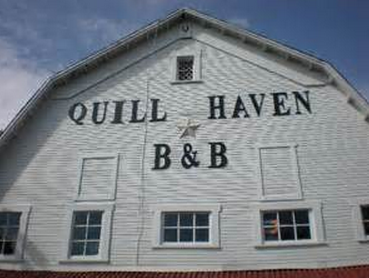
In my blog post from August 3, I mentioned staying at the Quill Haven B & B in Somerset, PA. Screen Shot 2014-07-11 at 9.48.41 PMRowland and Carol were wonderful hosts, and during one of our many conversations, I mentioned I was a quilter. Rowland said to me, in a rather excited tone: “do you know about floss?” I answered “yes, I’m also a dental hygienist” (groan). He did laugh politely, but then told us about a very large box he had in the attic of his barn. His sister-in-law had passed away a few years previous and she had at one time owned a needlework shop. They were still trying to find homes for some of her things and they hadn’t yet figured out what to do with this box full of embroidery floss! Then he asked if I wanted it. I of course said “yes”!

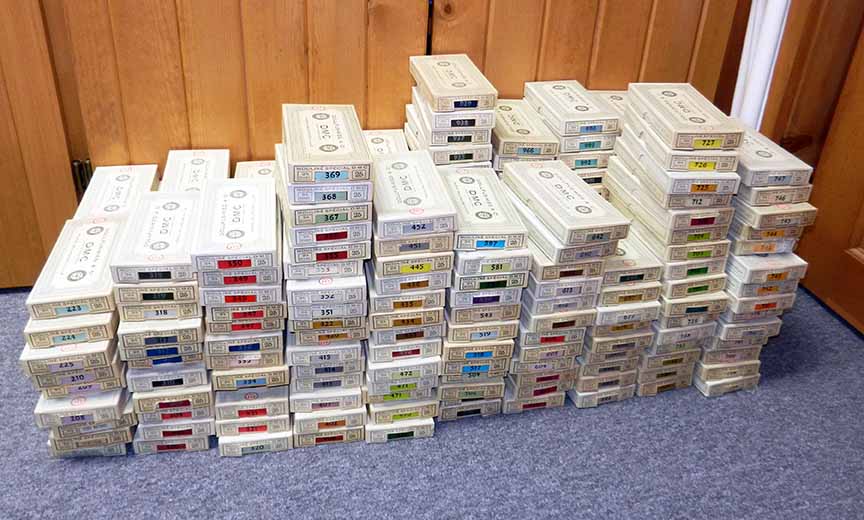
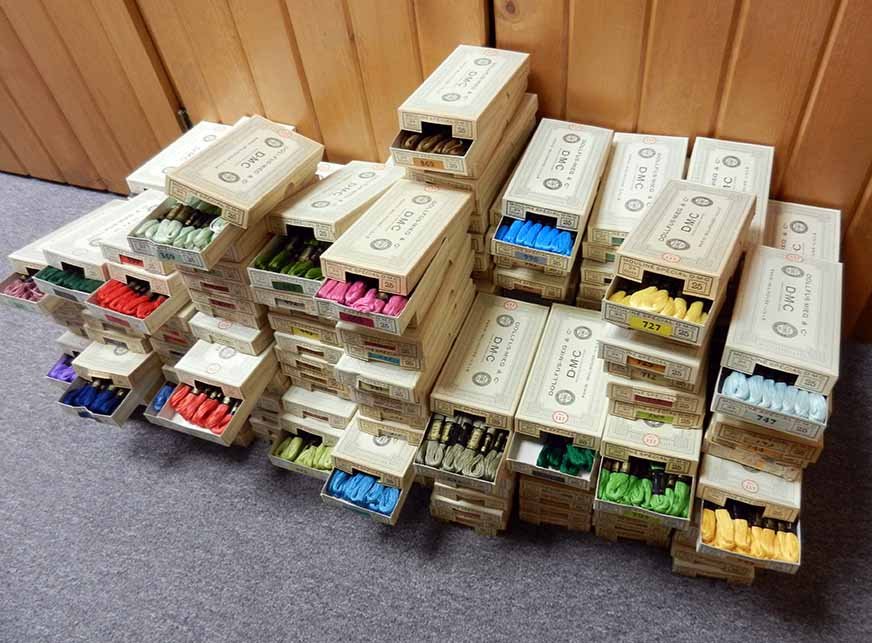
So Mike made room for it in the trunk of the car and I didn’t allow myself to open it until we were home and unpacked. What an adventure opening that box was! It contained 237 boxes of DMC floss!!

DMC Embroidery Floss

The back of each box is stamped “Made in France”, and they look to be quite a few years old. I did an internet search to learn about DMC. The company got it’s start in 1746, and you can read the history at: http://www.dmc-usa.com/DMC-History.aspx . There is more information about the company today on the “about” page of that same website.

So, I pulled out all the boxes and arranged them by number.

Vintage DMC Floss

237 is a lot of boxes of floss. Each box originally contained 24 skeins of the same color floss. There were only about 7 colors that had multiple boxes and a majority of the boxes were full! I thought I’d open a few so you could get a better feel for the amount of floss I had been generously given.

Vintage Embroidery FlossThe problem is – I don’t do that much embroidery. So what to do with all this floss?!? The first thing I decided I would do is keep one skein of every color for myself, so I pulled these from their boxes and laid them out in numerical order.

Lots of Embroidery FlossWOW (an understatement)! What a feast for the eyes! I was amazed at how often colors switched in this line up.

So here’s where you come in. I’m looking for suggestions on what to do with the rest of the floss.

Should I keep the collection together? If so, who would want it?

Should I take it to my quilt guild and have a give-away floss frenzy? (after you get first dibs – Barb J 🙂 )

Should I have some sort of a “winner take all” contest on the blog?

What would you do with it?

Perhaps everyone who comments to this post should win a box :-)!

Please let me know. I look forward to your input!

And a quick reminder

Saturday, August 23rd is rapidly approaching and there are still a few spots left in my free motion quilting workshops at the Wisconsin Museum of Quilts and Fiber Art. Click here for the descriptions and a link to sign up!

Wisconsin Museum of Quilts and Fiber Art

  • Page 1
  • Page 2
  • Go to Next Page »

Primary Sidebar

Archives

Recent Posts

  • London ~ and More
  • Designed For a Purpose
  • Squirrel Quilts and More
  • Vintage AppliquĂŠd Arrows and More
  • Fascinating Tidbits

Recent Comments

  • Karen Ann Moore on London ~ and More
  • Cheryl McLean on London ~ and More
  • Sue Halpern on London ~ and More
  • judy raddatz on London ~ and More
  • Joanne Corrigan on London ~ and More

Categories

Footer

My Guide

Whatever you do, do your work heartily, as for the Lord rather than for men.

—  Colossians 3:23

Contact Chris!

  • Home
  • About
  • Gallery
  • Classes
  • Trips
  • Books
  • Blog
  • Contact
  • Sign Up For My Blog

Copyright © 2026 ¡ Chris Quilts ¡ Website by Adunate ¡ Privacy Policy